
 Knowledge Panel
How To Get Google Knowledge Panel in 2026
You've been lied to. And I wasted 5 months believing those lies.
The internet is flooded with blogs, gurus, and AI-generated videos all preaching the same "gospel" for a Google Knowledge Panel: You need a Wikipedia page. For that, you need notability. For notability, you need major news coverage. For news coverage, you need a massive societal impact.
I followed this recipe to the letter. I even built and released open-source tools like LegalPages Pro and BrandVoice AI Forge, hoping to create that "public interest" spark. And you know where it got me?
Nowhere. The final, unspoken step in that guide is always the same: "Now, pay a 'journalist' to write about you."
That was my breaking point. I made a simple, powerful decision: If I didn't deserve a Knowledge Panel based on my genuine work and data, then I was fine without one. I refused to buy my way in.
That decision forced me to find a better way. And it led to this:
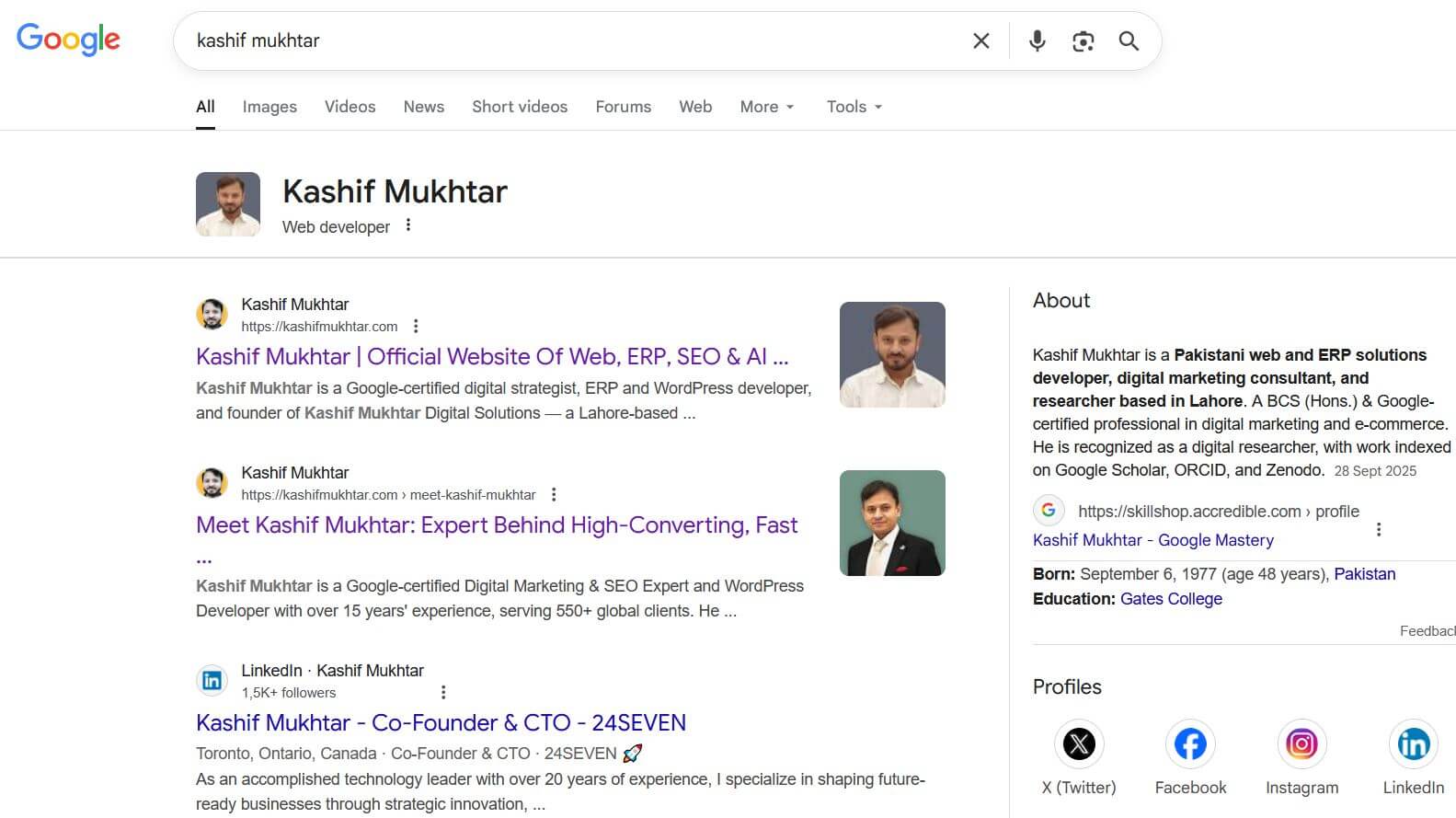
My real, verified Google Knowledge Panel. Achieved with zero Wikipedia, zero paid press, and 100% white-hat methods.
Let's dismantle the myth that held me back and replace it with the strategy that actually worked.
The "Notability" Myth vs. The "Entity" Reality
The "common knowledge" confuses two different systems:
The "Notability" Myth: This is the broken loop I was stuck in. It assumes Google is a human editor who only recognizes you if you're in specific, prestigious directories like Wikipedia.
The "Entity" Reality: This is the truth. Google's Knowledge Graph is a vast AI that tries to understand "entities" (people, places, things). It doesn't just read about you on other sites; it works to understand you as a distinct entity from the consistent data you provide directly.
Think of it this way: Wikipedia is a single, loud (and often expensive) voice in a crowded room telling Google who you are. I learned to make my own voice so clear, consistent, and authoritative that Google could understand me directly.
My Personal Case Study: The Proof is in the Panel
I stopped chasing the traditional "notability" checklist and started building a legitimate digital footprint. Here’s what I used:
What I DID Use:
My Personal Website (
kashifmukhtar.com): I focused on making it secure, technically sound, and blazing fast.Hand-Crafted Schema Markup: I moved beyond auto-generated plugins and learned to write precise, structured data by hand.
Optimized Social & Professional Profiles: My LinkedIn, GitHub, and other profiles were meticulously optimized for consistency.
Legitimate Directory Listings: I claimed my profile on key, authoritative platforms like Crunchbase and Clutch.
What I DID NOT Use:
❌ A Wikipedia page
❌ A Wikidata entry
❌ Paid press coverage
❌ Any black-hat SEO tactics
The first sign that I was on the right track? Within weeks, my website started consistently ranking between #2 and #4 on Google for my own name, "Kashif Mukhtar." This was the initial crack in the myth—Google was beginning to recognize my website as the primary source of truth about me.
The Biggest Hurdle: My Schema Breakthrough
My biggest technical battle was with Schema Markup. For weeks, I relied on plugins—even paid "AI-powered" ones—and got zero results. The automated code was a mess.
I decided to learn it myself. As a developer, I knew code, but JSON-LD was new to me. It was a brutal process of endless failure. My method? I used AI not to write the code, but to audit it.
I would write a schema structure, then paste it into ChatGPT, Gemini, and Claude with the prompt: "Rate this JSON-LD schema out of 100 for completeness and correctness."
The results were disheartening. I started at a 40/100.
But I kept refining, learning, and iterating. I didn't stop until I had pushed the scores to 100/100 on ChatGPT, 90/100 on Gemini, and 98.6/100 on Claude. It's now called Schema Structure Engineering.
The reward was immediate. Organic traffic to my site began to climb. This wasn't just vanity; it was proof that Google was finally understanding and valuing my content. This was the breakthrough that changed everything.
The "Aha!" Moment and The First Signals
The final pieces fell into place quickly after the schema breakthrough. In Google Search Console, I watched the signals pile up:
Branded SERP Changes: Google started showing my website's name instead of just the domain URL in search results.
Impressions Surge: My impressions for branded searches shot up.
Rich Results Appeared: I began to get FAQ rich snippets and star ratings.
The Finale: One morning, I searched my name and saw the golden ticket: the option to "Claim this Knowledge Panel."
I had done it. Not by following the gurus, but by trusting my own expertise and building a foundation so solid that Google had no choice but to recognize it.
Introducing "Digital Notability": The New Paradigm
Forget the old rules. Welcome to "Digital Notability."
Digital Notability isn't about who writes about you; it's about how clearly you can signal to an AI who you are, what you do, and why you are an authority. It's built on three pillars:
Clarity: Is your online information consistent across all platforms?
Authority: Does your digital presence demonstrate genuine expertise through your work and content?
Structure: Is the information on your website structured so Google's AI can easily understand it? (This is the schema superpower).
Ready to Audit Your Own Foundation?
I've translated the exact process I used into a simple but powerful Foundation Checklist. It will help you diagnose the strength of your own digital presence and show you exactly where to start, saving you months of wasted effort.
Download Your FREE Knowledge Panel Foundation Checklist
In this checklist, you'll get:
- The 3-point technical website audit I performed.
- The consistency scan for your social profiles.
- A guide to understanding your schema starting point.
Stop following the broken loop. Start building your legitimate digital notability
Frequently Asked Questions
Is Wikipedia required for a Google Knowledge Panel?
No, Wikipedia is not required for a Google Knowledge Panel. I got my verified Knowledge Panel without any Wikipedia page or Wikidata entry. Google's algorithms can recognize digital notability through proper website optimization, schema markup, and consistent online presence.
How long does it take to get a Knowledge Panel without Wikipedia?
After implementing the proper digital foundation with optimized schema markup, it took approximately 2-3 weeks for the first signals to appear in Google Search Console, and about 6-8 weeks total before I could claim my Knowledge Panel.
What are the first signs that a Knowledge Panel is being created?
The first signs include:
- Your website name appearing instead of domain URL in SERPs
- Increased impressions for branded searches in Google Search Console
- Appearance of rich results like FAQ snippets
- Finally, the option to 'Claim this Knowledge Panel' appearing when you search your name
Can anyone get a Knowledge Panel with this method?
This method works for individuals and businesses that have a legitimate online presence and can demonstrate expertise in their field. It requires a properly optimized website, consistent social profiles, and correct schema implementation - but does not require traditional notability signals like news coverage or Wikipedia.
What's the most important factor for getting a Knowledge Panel?
The most critical factor is proper schema markup implementation. Most auto-generated schema from plugins is insufficient. You need hand-crafted, comprehensive Person or Organization schema that clearly defines your entity to Google's algorithms.
Do I need to pay for press coverage to get a Knowledge Panel?
Absolutely not. I achieved my Knowledge Panel with zero paid press coverage. The method relies on building genuine digital authority through your own website, social profiles, and legitimate directory listings rather than paying for artificial recognition.
What if I don't have technical skills to write schema markup?
While hand-crafted schema delivers the best results, you can start with quality schema generators and then refine the output. The key is understanding what properties Google needs to recognize you as an entity. My free checklist includes a schema starting point guide for beginners.
Can this method work for local businesses?
Yes, absolutely. While this post focuses on personal Knowledge Panels, the same principles apply to businesses. You would use Organization schema instead of Person schema, and focus on consistent business information across directories and platforms.